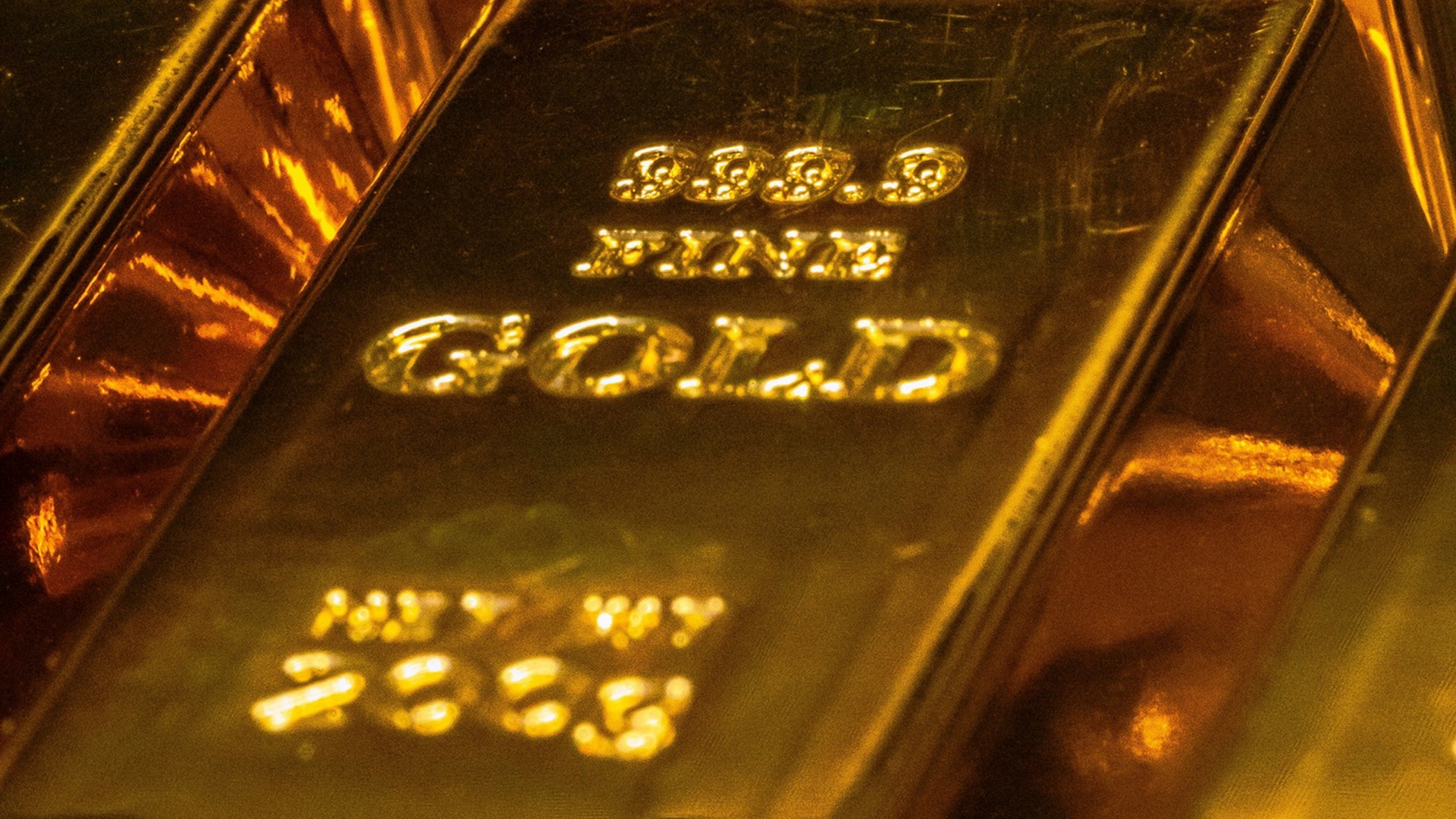
It is an old market saying, but it has rarely felt more accurate than it does now: when investors are worried about the future, they buy gold; when they are worried about the present, they sell it. That dynamic has defined precious metals markets in 2026. Despite intensifying war in the Middle East, gold and silver have not behaved like textbook safe-haven assets for much of the year. Instead, they have been caught in a tug-of-war between geopolitical risk, surging oil prices, inflation fears, rising bond yields, a strong US dollar and shifting expectations for Federal Reserve policy. The result has been a violent reversal from the extraordinary rally both metals enjoyed in 2025.
Gold reached an all-time high of $5,602 (€4,873) at the end of January and still appeared to have momentum in early March. Since then, however, it has fallen nearly 25%, dropping to a low of $4,100 (€3,567) before recovering modestly to trade around $4,500–$4,650.That pullback marks a dramatic break from last year’s surge. In 2025, gold climbed more than 60%, delivering one of its strongest annual performances in decades as central banks accumulated reserves and investors sought protection from economic uncertainty and geopolitical instability.
Silver followed a similar but more exaggerated path. Often a higher-beta version of gold, the metal hit a record $121 per ounce on 29 January, one day after gold’s peak, before plunging roughly 50% to a low near $61. It has since rebounded to around $70–$71.Silver’s rise in 2025 had been even more spectacular than gold’s, surging around 145% on the back of both investment demand and strong industrial consumption from solar panels, electronics and electric vehicles.
At first glance, the weakness in gold and silver appears counterintuitive. The war involving Iran has heightened fears over energy security, shipping routes and global stability. Oil prices have surged, with Brent near $115 a barrel and WTI above $100, while the Strait of Hormuz remains heavily disrupted, creating what some analysts describe as a crisis-level gap in global oil flows. Under normal circumstances, such a backdrop would be expected to send investors rushing into precious metals. Instead, macroeconomic forces have overridden their safe-haven appeal.
Higher oil prices have pushed up inflation expectations, leading markets to scale back hopes for Federal Reserve rate cuts and even consider the possibility that rates may stay higher for longer—or rise further. According to CME FedWatch data, markets currently assign a 96% probability that the Fed will leave rates unchanged at its April meeting, with only a 4% chance of a 25-basis-point hike. Even so, the broader message is that monetary easing is no longer a near-certainty. That has lifted US Treasury yields and strengthened the dollar, two of the most significant headwinds for precious metals. Gold and silver do not pay interest, so when yields rise, the opportunity cost of holding them increases. At the same time, a stronger dollar makes metals more expensive for non-US buyers, weighing on demand.
The market response has therefore been less of a classic “flight to quality” and more of a “flight to liquidity.” Investors facing volatility, margin calls and tighter financial conditions have sold even traditional havens to raise cash. Leveraged positions in futures and exchange-traded funds that had built up during 2025’s rally have unwound rapidly, deepening the correction.
Another important change has come from official-sector demand. Central banks were a crucial pillar of gold’s rally last year, adding 863 tonnes to reserves in 2025. But analysts at Heraeus warn that this source of support may be weakening.
The Turkish central bank, for example, reportedly reduced its gold reserves by around 53 tonnes to 772 tonnes, through outright sales and gold-backed currency swaps. While one central bank does not define the whole market, the move is significant because it shows that in times of financial stress, official institutions can use gold as a liquid, counterparty-free asset rather than continue accumulating it. If more central banks slow purchases or begin selling, one of the strongest structural drivers of gold demand could fade just as speculative positioning is already being cut back.
Silver has suffered from the same macro pressures as gold, but its outlook is somewhat more complex because it straddles two roles: precious metal and industrial input. On the one hand, higher yields, a stronger dollar and investor liquidation have dragged silver sharply lower. On the other hand, its long-term industrial demand remains solid, supported by the global energy transition and electronics manufacturing.
There are also emerging signs of supply growth. Heraeus noted that KGHM Group’s silver production rebounded in the first two months of 2026, reaching 252.3 tonnes, while Coeur Mining raised its silver production guidance following its acquisition of New Gold. Coeur now expects to produce between 18.68 million and 21.93 million ounces this year, up from 17.9 million ounces in 2025. That increase in output may act as an additional restraint on silver prices in the near term, even if the broader industrial story remains constructive over the longer horizon.
In recent sessions, both metals have shown signs of stabilizing. Gold rose back toward $4,568–$4,652 per ounce, while silver climbed to around $71 after rebounding from three-month lows. Silver gained 2.8% last week, its first weekly advance in a month, helped by bargain buying and a softer US dollar. The dollar index slipped around 0.2% on Monday from a two-week high, as investors assessed the possibility of renewed US-Iran negotiations in Pakistan and the broader implications of the conflict. That pullback in the greenback has given precious metals some breathing room.
Markets also watched Federal Reserve Chair Jerome Powell for policy clues. Speaking at a Harvard University event, Powell said interest rates are “in a good place” to respond to rising oil prices and suggested inflation remains reasonably well anchored. His remarks were not seen as dramatically hawkish, limiting further upside for the dollar and helping metals maintain their rebound. Analysts at Economies.com said that if Powell’s tone proves less hawkish than expected, continued dollar weakness could support further gains in both gold and silver.
Even so, the metals market remains highly sensitive to headlines from the Middle East. Heraeus noted that President Trump’s statements on Iran have been a key source of short-term volatility. Gold sold off sharply to around $4,099 after Trump threatened strikes on Iranian power plants if the Strait of Hormuz was not reopened within 48 hours, only to rebound once those strikes were postponed. Later comments, including talk of wanting to “take the oil” in Iran and potentially seize Kharg Island, kept tensions elevated and markets on edge.
For now, traders are reacting to every twist in US foreign policy, military escalation and any hint of negotiations. The same conflict that initially pushed inflation fears and yields higher is now also reviving demand for safe havens as concerns grow that a prolonged war could seriously damage global growth.
Indeed, sovereign bond prices have recently risen around the world as investors begin to worry less about runaway inflation and more about an economic slowdown or even fuel shortages. Strategists have drawn parallels with Covid-era supply disruptions, warning that if the conflict drags on and energy flows remain constrained, economies could face a different kind of shutdown—this time caused by lack of fuel rather than lockdowns. That shift matters because if growth fears start to outweigh inflation fears, precious metals could regain more of their traditional safe-haven bid.
The near-term picture for gold remains cautious. Heraeus analysts say the trend still looks bearish after the metal’s dramatic rally and subsequent consolidation, even if intraday rebounds continue. For silver, they see support around $64 per ounce as critical; if that level breaks, the next downside target could be $55. For now, however, silver has recovered above $70.
Ultimately, gold and silver are being pulled in opposite directions by two competing narratives. One is inflationary: war drives oil higher, keeps rates elevated, boosts the dollar and hurts non-yielding metals. The other is defensive: prolonged conflict threatens growth, weakens confidence and revives demand for havens. That tension explains why price action has been so erratic. Precious metals are no longer moving purely on fear, but on what kind of fear dominates the market at any given moment.
For much of 2026, investors have been more afraid of inflation, tighter policy and forced liquidation than of geopolitical uncertainty itself. But if the Iran conflict evolves from an inflation shock into a broader growth shock, gold and silver could yet rediscover the haven appeal that has so far been overshadowed.