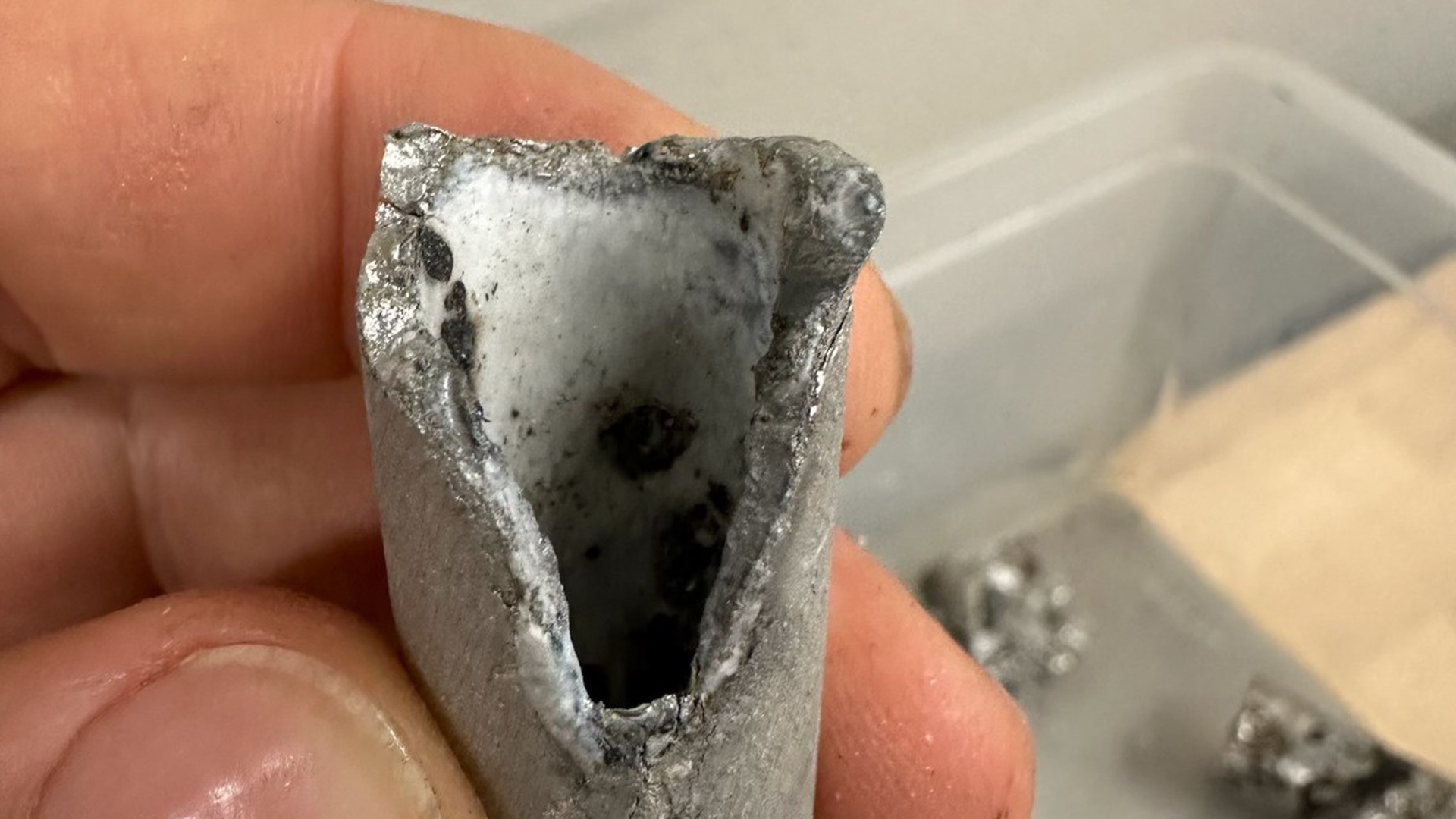
Iridium is one of the PGMs that is very hard to assay. It's not simply a matter of detecting it. You have to take a representative sample, recover the iridium from that sample, and then measure it. A perfectly accurate instrument reading will not correct an error made earlier in the process.
Iridium melts at around 2446°C and is very dense. If you're melting a mixed metal lot at a lower temperature, you can end up with iridium-rich grains that stay solid whilst the rest of the metal goes into solution. Those grains can settle in the crucible, or they can be unevenly distributed. A pin or dip sample could well pick up a grain and could well miss it. This is the so-called 'nugget effect' and can result in very different results from the same lot. Iridium-bearing ores, slags, and scrap can also be uneven. You can only get a reliable sample with multiple increments, proper preparation, and test portions appropriate to the material. You simply cannot get the true composition of the lot from a single small scoop.
Bulk iridium resists aqua regia. If you're only looking at the liquid that comes out of a digestion, the iridium will be left behind, and the instrument will therefore give a stable, apparently valid reading that massively underestimates the true total. Conventional lead fire assay can also recover iridium very poorly. Iridium lost to the slag and/or lost during the assay will simply not be present in the instrument. Some specialist labs will use nickel sulfide (NiS) fire assay instead. The PGMs are collected in a molten NiS matte, which is then broken down and the PGMs prepared for analysis. NiS collection is not necessarily quantitative, with losses occurring in the fusion and separation steps, and trace PGMs in the nickel reagents can give rise to elevated blanks. Oxidizing alkaline fusion (typically using sodium peroxide) is another way to attack refractory iridium before dissolution and can be very effective. It is hazardous, extremely labor-intensive, and puts significant strain on equipment. Whatever method is used, the lab will have to check the recovery for that material.
ICP-OES or ICP-MS normally measures iridium. Emission lines in ICP-OES can be susceptible to interference from other metals (copper and gold in particular), so line selection and correction are critical. ICP-MS is more sensitive, but you still face blanks, matrix effects, and potential mass interferences at trace levels. There is no such thing as a universal % uncertainty for an iridium assay. A well-validated method under ideal conditions might have a repeatability better than 5% RSD. That 5% RSD reflects repeatability under the specified conditions and does not represent the uncertainty of an irregular commercial lot. You can easily see much larger differences between labs because of sampling variation, incomplete recovery, and low concentrations.
A published ultratrace detection limit does not represent the actual reporting limit a lab will achieve for a particular industrial feedstock. A good assay report will contain the method of preparation and the method of measurement, will state the reporting limit and the units, and will be very clear about the difference between a result below the reporting limit and a result of zero. To avoid disputes, the buyer and seller should agree on the sampling and settlement rules before processing. The material is split into matched splits for each of the two labs, and a sealed reserve is kept. If the two results are within an agreed splitting limit, they can be averaged. If they are not, the reserve goes to an independent umpire lab. The contract will specify how the umpire's result is to be used in the settlement.
Some labs will just report iridium very poorly as a matter of course, using the standard precious metal methods for the other metals. An unrepresentative sample, incomplete digestion, or unproven recovery can all result in a figure that looks correct but is, in fact, very misleading. If you've got iridium-bearing material you're looking to sell, we'll take it at Phoenix Refining, and we can go through the sampling, assay approach, and settlement terms before any transaction occurs.