The global shift toward clean energy, advanced electronics, and high-performance industrial systems depends on a small group of critical minerals. Among them, iridium presents one of the most severe supply bottlenecks. Iridium is one of the rarest stable elements on Earth and has become essential to twenty-first-century technologies. It is exceptionally dense, has a melting point above 2,446°C, and resists corrosion in environments that destroy most other metals. These properties make it indispensable in proton exchange membrane, or PEM, water electrolyzers for green hydrogen production; high-temperature crucibles for semiconductor crystal growth; chemical catalysts; medical devices; aerospace components; and advanced electronics.
Despite this importance, the world produces only about 7,000 to 10,000 kilograms of primary iridium per year. This ceiling is not a temporary result of underinvestment or logistics. It is a structural reality. Iridium is rarely mined directly. It is recovered only as a trace byproduct of platinum, palladium, rhodium, nickel, and copper mining. As a result, its supply cannot expand simply because its price rises. The economics of other metals determine how much iridium reaches the market. This limitation is the main reason iridium supply cannot scale with demand.
Iridium is scarce even compared with gold. Gold has an estimated crustal abundance of about 4 parts per billion, while iridium is estimated at roughly 0.001 parts per billion. The production gap is just as dramatic. The world mines around 3,300 metric tons of gold per year, compared with only 7 to 10 metric tons of iridium. In practical terms, more gold is mined in a week than iridium is produced in a year.
Gold also benefits from enormous above-ground stocks in jewelry, investment products, and central bank reserves. Iridium does not. It is primarily an industrial metal, embedded in catalysts, electrodes, crucibles, electronics, and medical devices. Because most newly produced iridium quickly goes into industrial use, liquid inventories remain thin. There is no large stockpile that can be released to cushion the market when demand rises. This lack of inventory makes the market extremely sensitive. In a market measured in only a few tonnes per year, even small increases in demand can create severe shortages and price spikes.
The most important supply constraint is iridium’s status as a byproduct. Mining companies do not build mines for iridium. They build mines for platinum, palladium, rhodium, nickel, and copper. Iridium is recovered in tiny quantities from these operations.
This creates what is known as the byproduct trap. If the host metals become less profitable, mines reduce output, delay investment, or close shafts. When that happens, iridium supply falls as well, regardless of how high the iridium price is. This is especially important in South Africa, where platinum-group metal mines produce the majority of global iridium. These mines have historically depended heavily on revenue from platinum, palladium, and rhodium. But internal combustion engine catalytic converters have largely driven demand for palladium and rhodium. As electric vehicles gain market share, long-term demand for those metals weakens.
That creates a contradiction within the energy transition. The decline of internal combustion engine vehicles can undermine the economics of the mines that produce palladium and rhodium. But those same mines also produce the iridium needed for PEM electrolyzers and green hydrogen. In effect, the transition away from the old automotive catalyst economy can restrict the supply of a metal required for the new hydrogen economy.
The iridium supply is also highly concentrated. Roughly 94 percent of primary iridium output comes from South Africa and Russia. South Africa alone produces more than 80 percent of global primary iridium, mostly from the Bushveld Igneous Complex. As mining has shifted from shallower deposits to deeper, more complex reefs, production has become more costly and energy-intensive. Deep platinum-group metal mining requires continuous electricity for ventilation, cooling, hoisting, pumping, and smelting.
South Africa’s chronic electricity shortages and load shedding directly constrain these operations. Mines may have to reduce production or suspend activity during periods of grid instability. Smelters are especially vulnerable because they require stable power to maintain safe and efficient thermal conditions. No price increase can force more iridium into the market if the power grid cannot support the mining and refining process. Russia supplies a smaller but still important share of global iridium, largely through nickel-copper mining controlled by Nornickel. Russian iridium is tied to base metal production, so it cannot scale independently either. Geopolitical tensions, sanctions-related friction, financing constraints, and opaque trade routes further reduce reliable access for Western buyers.
Even after ore is mined, iridium is difficult to refine. Its exceptional corrosion resistance is one reason it is so valuable, but that same chemical inertness makes it difficult to dissolve, separate, and purify. Iridium is often among the last metals isolated in platinum-group refining circuits. Producing high-purity iridium requires complex chemistry, aggressive reagents, oxidation processes, selective precipitation, ion exchange, and solvent extraction. This creates long lead times between mine output and the availability of usable high-purity material. In a market this small, refining delays matter. The supply chain cannot respond quickly to sudden increases in demand. Even if ore production is stable, bottlenecks in separation and purification can limit the amount of material available to downstream users.
The largest new source of iridium demand comes from green hydrogen. PEM electrolyzers are favored for renewable-powered hydrogen production because they are compact, efficient, and responsive to variable wind and solar generation. However, PEM electrolyzers require iridium oxide at the anode, where the oxygen evolution reaction occurs. This environment is highly acidic and strongly oxidizing. Most catalyst materials corrode or degrade under these conditions. Iridium remains the only commercially proven material with the durability required.
Historically, PEM electrolyzers have required around 400 kilograms of iridium per gigawatt of capacity. At that loading, large-scale hydrogen deployment would require quantities far beyond annual global production. Announced electrolyzer projects could push iridium demand into tens of tonnes per year, compared with a primary supply of only 7 to 10 tonnes. The arithmetic is simple: the world cannot build a large PEM electrolyzer industry using traditional iridium loadings and primary mining alone.
The hydrogen industry is working aggressively to reduce iridium intensity. This process, known as catalyst thrifting, aims to use less iridium per electrolyzer while maintaining performance and durability. One promising approach involves mixed ruthenium-iridium oxide catalysts. Ruthenium has strong catalytic activity and is more available than iridium, but pure ruthenium oxide degrades too quickly in acidic PEM conditions. By combining ruthenium with iridium in engineered mixed oxides, manufacturers can reduce iridium loading while preserving stability.
Future systems may reduce iridium requirements by 50 to 90 percent. This is essential for green hydrogen deployment. But it does not eliminate the problem. If PEM electrolyzer capacity expands at the scale targeted by governments and industry, electrolyzers will still consume a major share of global iridium supply. Thrifting buys time, but it does not make primary iridium supply scalable.
Iridium demand is also growing outside hydrogen. In semiconductors and telecommunications, it is used in high-temperature crucibles for growing ultra-pure crystals such as lithium tantalate and lithium niobate. These crystals are essential for surface acoustic wave filters used in smartphones, wireless devices, satellite systems, and 5G and 6G infrastructure. The crystal-growth process requires extreme heat and contamination-free conditions. Iridium is uniquely suited because it withstands high temperatures, resists oxidation, and does not contaminate sensitive melts. As advanced communications, data centers, and semiconductor manufacturing expand, they are expected to drive this demand even higher.
Medical and chemical applications add a stable baseline. Iridium catalysts are used in important chemical processes, while their corrosion resistance and biocompatibility make them valuable in pacemakers, neural stimulation electrodes, surgical tools, and other medical devices. These applications are difficult to substitute because they depend on iridium’s unique properties and require long qualification cycles. This situation makes demand sticky. Higher prices may encourage efficiency, but they do not quickly eliminate consumption.
Iridium’s price history reflects its structural scarcity. For years, the metal traded for less than $500 per troy ounce. By 2020, it had risen to around $1,645. As green hydrogen demand, semiconductor growth, South African power problems, and geopolitical risk intensified, prices climbed sharply. This volatility is not simply speculation. It reflects a small physical market with limited inventory, concentrated production, and little ability to respond to demand shocks. In larger commodity markets, new projects, stockpiles, substitutions, and diversified supply can absorb pressure. Iridium has few of these buffers. When industrial buyers compete for a few tonnes of available metal, small shifts in demand can produce extreme price movements and physical procurement risk.
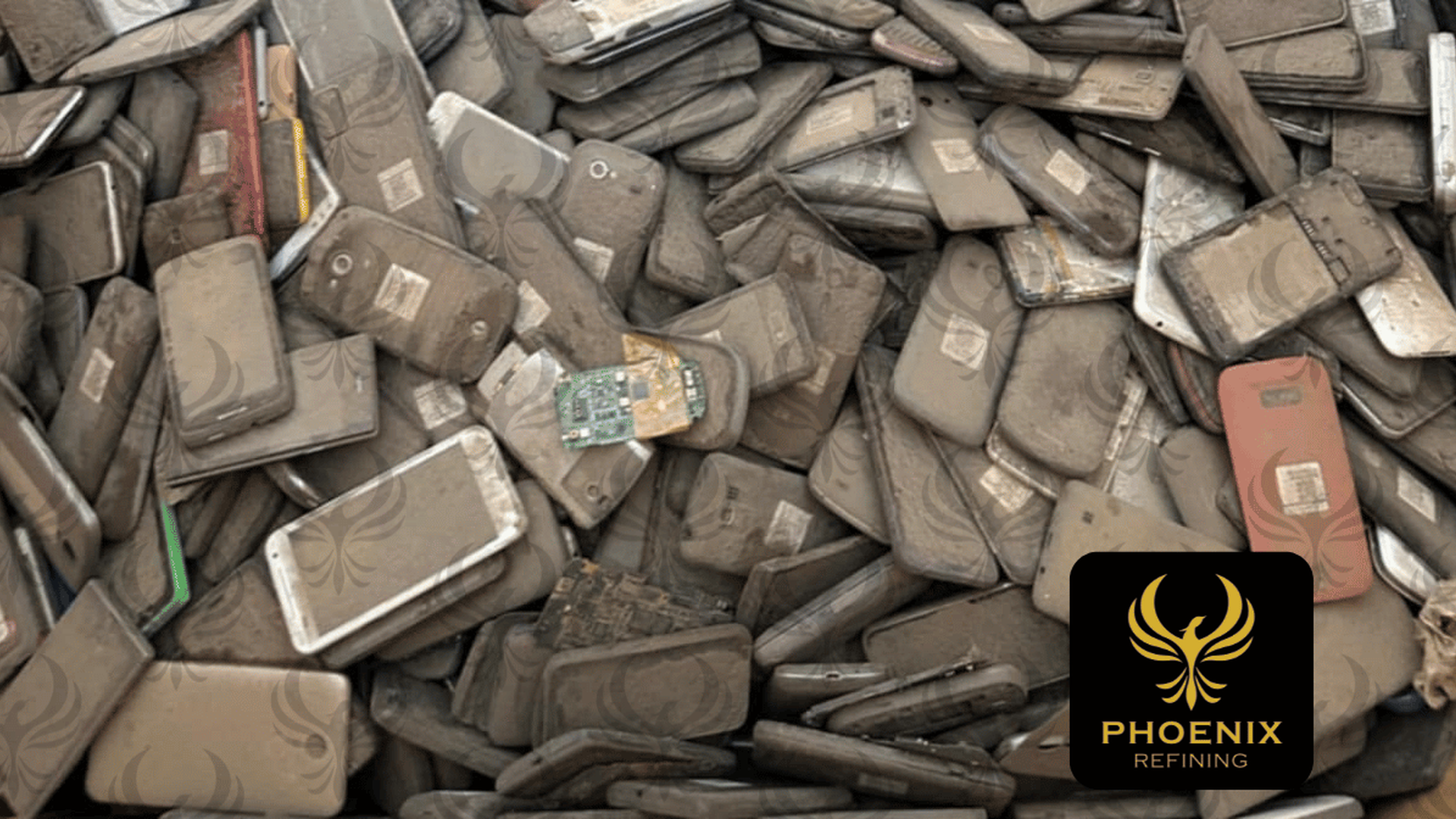
Because primary supply cannot scale, recycling is the only realistic path forward. Closed-loop recycling is especially important. In a closed-loop system, iridium is recovered from end-of-life products and returned directly to the same supply chain.
For PEM electrolyzers, this means recovering iridium from spent membrane electrode assemblies, purifying it, and reusing it in new catalyst-coated membranes. For electronics and industrial users, it means reclaiming iridium from crucibles, catalysts, sputtering targets, and other high-value components.
This model turns iridium from a consumable input into a circulating strategic asset. It reduces exposure to South African infrastructure risk, Russian geopolitical risk, and spot-market price spikes. Newly mined iridium serves as the initial input to a circular system rather than as the main source of future growth. Better recycling technology will be essential. Traditional smelting, precipitation, solvent extraction, and ion exchange can be energy-intensive, hazardous, or inefficient when processing complex low-concentration feedstocks. Newer approaches, such as molecular recognition technology, use engineered resins to selectively bind target metal ions, enabling iridium to be recovered with greater selectivity, lower energy use, and fewer harsh chemicals. This requirement matters because modern applications often require purity above 99.9 percent. Recycling must not only recover iridium; it must return it to the market at the quality required for electrolyzers, semiconductors, medical devices, and chemical catalysts.
Iridium supply cannot scale with demand because the constraint is physical, not financial. The metal is extraordinarily rare, produced only as a byproduct, concentrated in a few vulnerable jurisdictions, and difficult to refine. At the same time, demand is rising from green hydrogen, semiconductors, telecommunications, medicine, and chemicals.
Even with major reductions in iridium loading, the world cannot mine enough primary iridium to satisfy future industrial ambitions. Every gram already in use must be treated as part of a strategic reserve. The future of iridium-dependent technologies will not depend on discovering vast new supplies. The efficiency with which industry can recover, purify, and redeploy the metal will determine the future of iridium-dependent technologies. Closed-loop recycling is not merely an environmental improvement. It is the condition for scaling the technologies that depend on one of the rarest metals on Earth.