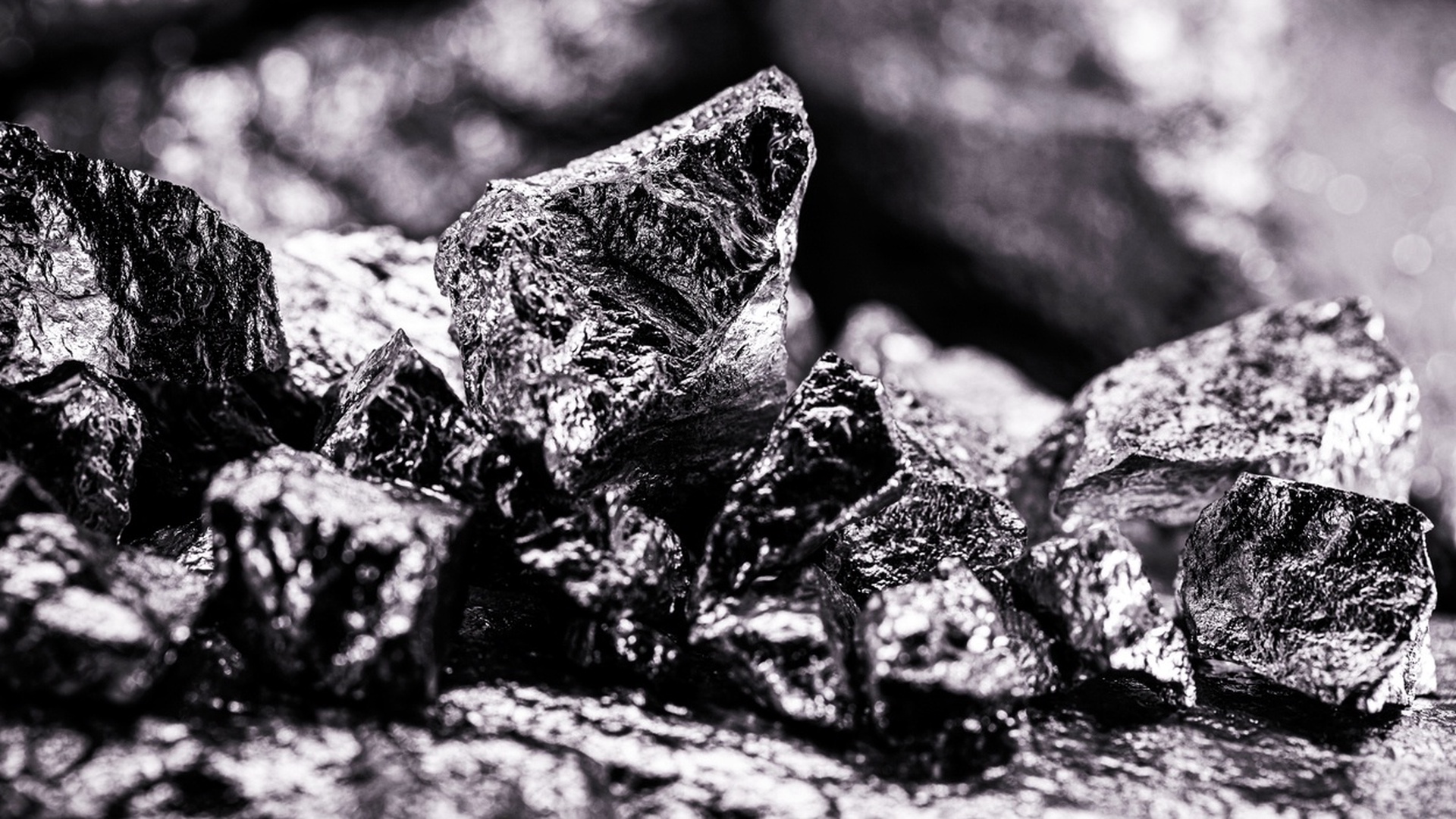
Osmium and iridium belong to the platinum-group metals (PGMs), a family prized for density, chemical nobility, and resilience in extreme environments. Both are extremely rare and usually recovered as byproducts of platinum, nickel, or copper mining, especially from deposits such as South Africa’s Bushveld Complex or sulfide ores in Russia and Canada. They are nearly equal in density; osmium is slightly denser under standard conditions, at about 22.589 g/cm³ versus iridium’s 22.562 g/cm³, but beyond that superficial similarity, their engineering value diverges.
For a time, osmium’s exceptional hardness and very high melting point made it attractive wherever wear and heat were severe. It appeared in lamp filaments, pen nibs, phonograph needles, and precision pivots. But as industrial systems became more demanding and more safety-conscious, osmium’s liabilities became impossible to ignore. Iridium, with nearly the same heft but far better manufacturability and a vastly safer oxidation chemistry, took its place.
Osmium has several properties that initially made it alluring. It is the densest naturally occurring stable element, one of the least compressible materials known, and among the hardest elemental metals. Its melting point, around 3033°C, exceeds that of iridium. In principle, these traits should have made it perfect for high-wear parts and hot environments.
In practice, they created serious problems. The first was brittleness. Osmium is so hard and so mechanically unforgiving that it is extremely difficult to machine, form, forge, or draw into wire. That matters enormously in manufacturing. Industrial materials are not chosen simply for peak hardness; they must also be processable into useful shapes. A metal that cannot be reliably worked into electrodes, filaments, or vessel walls becomes expensive and impractical, no matter how impressive its raw properties.
The second problem was even more serious: toxicity through oxidation. When finely divided osmium, or osmium heated sufficiently in air, reacts with oxygen, it forms osmium tetroxide (OsO4). This compound is volatile, highly oxidizing, and acutely toxic. It can damage eyes, lungs, and skin at extremely low concentrations, and exposure can cause permanent blindness or fatal pulmonary injury. Its vapor pressure at room temperature is high enough to pose a real workplace hazard, especially during grinding, soldering, powder handling, or any hot process involving air. This single chemical tendency fundamentally changed osmium’s industrial future. As long as manufacturing remained relatively crude, dangerous materials could survive in niche use. But as production scales increased and occupational standards tightened, osmium became increasingly unacceptable.
In the 19th century, pen makers faced a significant challenge: they needed materials that could withstand the wear and tear of writing while also resisting the corrosive effects of iron gall inks. One early solution was osmiridium, a naturally occurring alloy-like mixture of osmium and iridium. This material was used to create the tips of fountain pen nibs, with specks attached to the nib points to provide a long-lasting writing surface. However, osmium’s inherent drawbacks quickly became evident. The metal was notoriously difficult to shape, and at least one pen maker even returned samples of osmiridium because it proved too challenging to work with. As the industry evolved, manufacturers gradually shifted away from poorly refined osmium-rich materials, opting instead for more manageable and consistent iridium-based or ruthenium-iridium tipping alloys. This transition was not solely due to wear resistance; factors like workability and safer processing during high-heat fabrication also played critical roles in this decision.
As for osmium’s applications beyond writing, it reached a brief commercial high with the introduction of the osmium lamp at the turn of the 20th century. Inventor Carl Auer von Welsbach used osmium in incandescent filaments, capitalizing on its ability to withstand white-hot operating temperatures better than earlier materials. However, osmium’s rigidity posed a significant manufacturing challenge, as it could not be drawn into wire. Consequently, manufacturers resorted to a cumbersome powder-metallurgy “paste process,” which involved shaping filaments from fine osmium powder mixed with a binder, then sintering them under vacuum. While this method was ingenious, it was also fragile and presented safety hazards. Handling the powder risked forming toxic osmium tetroxide, and the metal’s rarity made its supply unstable. When ductile tungsten wire became available, it soon displaced osmium lamps due to its superior qualities: it was hotter, stronger, more scalable, and free from the toxic oxidation risks associated with osmium. This pattern, showcasing osmium’s technical intrigue juxtaposed with its industrial fragility, echoed throughout various industries.
Iridium’s success can be attributed to its ability to address the challenges posed by osmium. One of its most significant advantages is its safer oxidation behavior. Unlike osmium, which can produce a volatile poison like osmium tetroxide under normal manufacturing conditions, iridium does not pose the same inhalation hazards. This transformation in workplace safety is crucial, as handling iridium eliminates the constant threat of generating toxic vapors during heating or powder processing. Consequently, materials that require extensive containment and specialized safety protocols find themselves at a disadvantage compared to those that can achieve similar performance without these risks.
Moreover, despite being a difficult, hard and expensive metal, iridium offers better manufacturability than osmium. With the right alloying and high-temperature processing, iridium can be fabricated into fine wires, electrodes, and complex vessels, making it significantly more valuable in modern precision engineering. Manufacturers today do not just require metals that can withstand friction and heat; they also need materials that can be shaped into small, reproducible parts with precise dimensions. Iridium meets this demand effectively, while osmium often falls short.
In terms of corrosion resistance, iridium is widely recognized as the most corrosion-resistant metal, capable of withstanding harsh environments that would compromise most other engineering metals. Its ability to resist aggressive hot chemical conditions and electrochemical stress broadened its operational capabilities, especially in systems where oxidation and corrosive elements are unavoidable.
Finally, while osmium may have a higher melting point, iridium excels in applications involving high temperatures, mechanical stress and thermal cycling. The key consideration in many of these situations is not simply which metal can withstand the highest temperatures, but rather which one can be reliably turned into a functional component that endures use. Iridium consistently proves to be the better choice in this regard.
As 20th- and 21st-century technologies advanced, iridium became indispensable in exactly the kinds of conditions once thought to favor osmium.
Modern spark plugs operate under intense thermal and electrical stress: repeated high-voltage arcs, high pressures, corrosive combustion gases, and long service intervals. To improve ignition efficiency, manufacturers developed very fine center electrodes, in some cases as small as 0.4 mm.
Iridium made this possible. Its resistance to spark erosion, oxidation, and thermal degradation allows these tiny electrodes to survive for tens of thousands of miles. In distributorless ignition systems, where wear can occur on both electrodes, iridium’s durability became even more valuable. Osmium’s brittleness and oxidation hazard made it unsuitable for this kind of high-volume, high-reliability automotive use.
Modern electronics, optics, and medical systems depend on synthetic single crystals grown from reactive oxide melts at temperatures approaching 2300°C. Crucibles for these processes must resist heat, contamination, and chemical attack while maintaining structural integrity.
Iridium became the standard because tungsten and molybdenum oxidize too readily, and platinum softens or melts too soon. Iridium crucibles, especially when alloyed to improve creep resistance, can endure these conditions for long periods. Here again, osmium’s theoretical heat resistance was outweighed by practical concerns: brittle behavior, difficult fabrication, and unacceptable oxidation chemistry.
The clearest sign of iridium’s ascendancy is its role in proton exchange membrane (PEM) water electrolysis, a key technology in the green hydrogen economy. At the anode of a PEM electrolyzer, catalysts must survive a strongly acidic environment and high anodic potentials while driving the oxygen evolution reaction.
Iridium-based catalysts are currently the only mature materials that combine the necessary catalytic performance with sufficient stability. This makes iridium a strategic metal in decarbonization. Osmium, despite belonging to the same family, is not the preferred choice because its oxidation chemistry is fundamentally too hazardous and unstable for such environments.
The move from osmium to iridium was also economic. Toxicity raises manufacturing costs in ways that raw material tables do not show. A metal that can generate lethal vapor requires specialized ventilation, monitoring, PPE, waste handling, decontamination procedures, and regulatory oversight. Even small-scale laboratory use of osmium tetroxide demands ducted fume hoods, strict waste classification, and chemical neutralization protocols such as reduction with corn oil, sodium sulfite, or sodium sulfide. Those burdens become intolerable in mainstream manufacturing.
By contrast, iridium’s difficulty lies mostly in supply and refining, not in routine toxic volatility. It is scarce and difficult to dissolve during recycling, often requiring aggressive hydrometallurgical methods, such as alkali fusion, before separation and recovery. But those challenges occur mainly upstream in refining and recycling. In finished products and manufacturing environments, iridium is far more manageable than osmium.
That distinction matters. Industry will tolerate expensive processing if the end material performs safely and reliably. It will not tolerate a production metal that threatens workers every time it is heated or powdered.
Today, osmium remains useful in narrow scientific niches, especially as osmium tetroxide in electron microscopy and in specialized organic synthesis. But in broader metallurgical practice, osmium is often encountered less as a desired end material than as a problem to be controlled. In platinum-group-metal refining, osmium is often deliberately oxidized to OsO4, then carefully scrubbed and reduced, allowing iridium, platinum, and other valuable metals to be purified. That is a striking reversal. The same chemical behavior that once doomed osmium as a manufacturing metal now defines it chiefly as a toxic intermediate to be managed.
Manufacturing shifted from osmium to iridium because iridium delivers what modern industry needs: high-temperature stability, wear resistance, corrosion resistance, and sufficient workability to fabricate reliable parts without osmium’s catastrophic toxicity risk.
Osmium’s extreme hardness, density, and melting point once made it attractive for demanding applications. Still, its brittleness and, above all, its readiness to form volatile osmium tetroxide made it fundamentally unsafe and impractical for large-scale use. Iridium, though nearly as dense and also highly refractory, offered a far better balance of properties. It could be formed into spark plug electrodes, crucibles, and precision wear surfaces; it resisted corrosion more effectively; and it did not burden manufacturing with the ever-present danger of generating a lethal oxide. In the end, the shift was not simply from one rare metal to another. It was a shift from a material that excelled in isolated properties to one that could survive the full realities of industrial life: processing, safety, scale, performance, and reuse. That is why osmium became a historical curiosity in high-friction, high-temperature manufacturing and why iridium became essential.