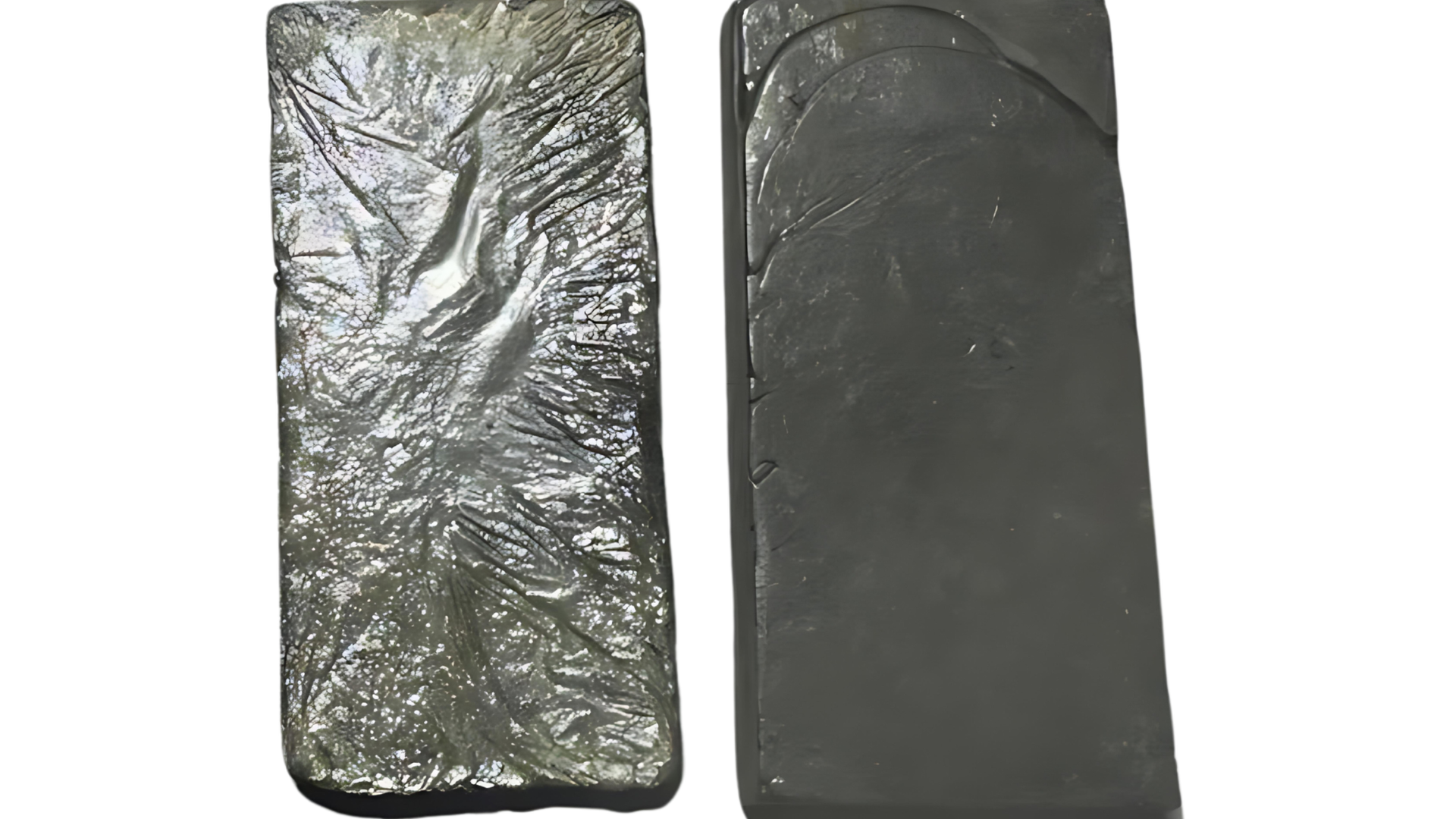
Rhodium is one of the most unusual commodities in the world. It is not merely expensive because it is rare; it is expensive because it sits at the intersection of physical scarcity, opaque market structure, chemical indispensability, and geopolitical supply fragility. Unlike gold, which is deeply financialized, or platinum and palladium, which have larger industrial and investment markets, rhodium operates in a minuscule and highly specialized ecosystem. That combination makes its price uniquely explosive. When demand rises even modestly, there is often no easy way for the market to respond. If an automaker needs thousands of ounces of rhodium to keep catalytic converter production running, it must procure the physical metal regardless of the spot price. The alternative is not simply delaying a purchase; it may mean interrupting the manufacture of entire vehicle fleets worth billions of dollars. In such a market, small supply-demand imbalances can create violent price movements.
The global rhodium market is exceptionally small compared with other precious metals. This minuscule market size means that even minor changes in supply or demand can translate into dramatic price swings. A single large industrial purchase, a refinery disruption, or a mining interruption can move the market sharply because inventory is limited and few participants can supply significant volumes quickly. This is fundamentally different from gold or silver. In those markets, large above-ground stocks, deep financial markets, and extensive trading activity help absorb shocks. Rhodium has none of those cushions. It is a physical industrial metal, first and foremost, and its price is largely determined by immediate availability.
Compounding rhodium’s physical scarcity is its unusual financial structure. Gold, silver, platinum, and palladium are actively traded on highly liquid global futures exchanges, including COMEX in the United States and the Shanghai Gold Exchange. Those markets support hedging, short-selling, speculation, and arbitrage. While speculation can sometimes amplify volatility, deep futures markets generally provide liquidity and help smooth price discovery.
Rhodium, by contrast, lacks a robust dedicated futures market. It trades almost exclusively over-the-counter (OTC). The OTC rhodium market is highly illiquid and dominated by a restricted group of participants: mining companies, specialized refiners, industrial consumers, and a small number of institutional bullion desks. As a result, price discovery is concentrated and opaque. There is no large paper market capable of absorbing sudden shifts in physical demand. If an original equipment manufacturer suddenly needs metal, or if a mining operation experiences disruption, the market can reprice immediately and drastically.
Investment exposure is also difficult to obtain. Some institutions, including major banks and bullion desks, offer OTC risk management products, such as LBMA fixing-averaging forwards, precious metals inventory financing, or certificates backed by physical assets. But these tools are generally inaccessible to ordinary investors. Physical rhodium bars and sponge carry substantial premiums, storage complications, and liquidity constraints. This lack of broad financialization is crucial. Rhodium’s price is governed overwhelmingly by physical supply and demand, without the stabilizing effect of the deep paper markets that influence gold, platinum, and palladium.
Rhodium’s extraordinary price is not based only on rarity. It is also rooted in chemistry. The metal possesses a set of physical and catalytic properties that make it nearly irreplaceable in its dominant use: reducing nitrogen oxides in automotive exhaust systems. Rhodium, chemical symbol Rh and atomic number 45, is a silver-white, highly reflective transition metal. It is extremely durable and has a melting point of roughly 1,964°C, higher than those of both gold (1,064°C) and platinum (1,768 °C). That matters because catalytic converters operate in harsh environments where exhaust temperatures can exceed 800°C to 1,000°C. A catalyst must resist sintering, maintain structural integrity, and remain chemically active under intense heat and rapidly changing gas conditions. Rhodium does this exceptionally well. It maintains thermodynamic stability during volatile chemical reactions and protects the active catalytic sites needed for emissions control.
The overwhelming majority of global rhodium demand, between 80% and 90%, comes from the automotive industry, where it is used in three-way catalytic converters. Internal combustion engines produce three major classes of harmful emissions: carbon monoxide, unburned hydrocarbons, and nitrogen oxides (NOx).
Platinum and palladium are excellent oxidation catalysts. They are effective at converting carbon monoxide into carbon dioxide and unburned hydrocarbons into water and carbon dioxide. But they are much less effective at reducing NOx.NOx removal requires a reduction reaction. Oxygen must be removed, and nitrogen atoms must be paired to form harmless dinitrogen gas, N₂. Rhodium is uniquely suited to this task.
On rhodium surfaces, nitric oxide can undergo reductive dimerization. Rhodium centers help form a hyponitrite intermediate, which is critical for nitrogen-nitrogen bond formation. The dissociation kinetics of nitric oxide on rhodium are far more favorable than on other platinum group metals. The activation energy barrier for NO dissociation on rhodium clusters is low, and the overall reaction reducing NO in the presence of carbon monoxide is strongly exergonic:
2NO + 2CO → 2CO₂ + N₂
This thermodynamic and kinetic advantage allows rhodium to deliver extremely high reaction rates under the complex and fluctuating conditions of real automotive exhaust. That is why platinum and palladium cannot simply replace rhodium in gasoline-powered vehicles. Increasing their loading would not produce the same NOx reduction performance. Automakers attempting to substitute away from rhodium would risk failing emissions standards. This chemical irreplaceability is the foundation of rhodium’s extreme valuation.
Although automobiles dominate rhodium consumption, other industries also compete for the limited supply. In chemical manufacturing, rhodium accounts for roughly eight percent of global use. Rhodium-based catalysts have historically played an important role in the Monsanto process for producing acetic acid through methanol carbonylation. Although the iridium-based Cativa process has displaced some of this demand, rhodium remains highly valuable in hydroformylation, which converts alkenes into aldehydes. Hydroformylation is essential in the production of detergents, fragrances, pharmaceuticals, and other industrial chemicals. Rhodium catalysts can be 1,000 to 10,000 times more active than cheaper cobalt carbonyl alternatives, justifying their use despite their high cost.
The glass industry also consumes rhodium, using approximately four percent of the global supply. Rhodium is alloyed with platinum to produce extrusion bushings for flat-panel displays, fiberglass, and specialized optical glass. These components must withstand molten glass, extreme heat, abrasion, and chemically aggressive environments without contaminating the final product. These secondary applications are not easily displaced—their inelastic demand further pressures an already constrained market.
In a normal commodity market, high prices encourage producers to increase output. If copper, oil, or iron ore prices rise enough, companies can often expand production, restart marginal operations, or invest in new capacity. Rhodium does not work that way.
There are no primary rhodium mines. Rhodium is produced almost entirely as a by-product of platinum, palladium, and nickel mining. This creates what can be called the by-product paradox: miners cannot simply decide to mine more rhodium because rhodium is not the main target of mining operations.
To increase rhodium output, a company must mine and process much larger quantities of the host metals, usually platinum or palladium. But if platinum prices are weak, expanding production solely to obtain more rhodium may be economically irrational. It could flood the market with excess platinum, depress the price of the mine’s primary product, and damage profitability. This means rhodium supply is tied to the economics of other metals. Even if rhodium prices surge, production cannot quickly respond unless the broader platinum group metals complex supports expansion.
Rhodium supply is also geographically concentrated to an extraordinary degree. Roughly 80% to 85% of primary rhodium production comes from South Africa, especially from the Bushveld Igneous Complex, one of the world’s richest geological sources of platinum group metals. This concentration creates systemic vulnerability. Major producers such as Anglo American Platinum, Impala Platinum, and Sibanye-Stillwater operate complex, deep-level mines that are labor- and capital-intensive and technically challenging.
South African mining faces recurring risks, including power shortages, labor disputes, safety stoppages, water constraints, aging infrastructure, and rising operating costs. Load-shedding and electricity instability are especially important because deep underground mining and refining require continuous, reliable power. Even temporary disruptions can affect output. Because so much of the world’s rhodium comes from one region, localized problems can become global supply shocks. A strike, smelter outage, safety shutdown, or grid failure in South Africa can rapidly tighten the entire rhodium market.
Rhodium’s extraordinary valuation reflects a rare alignment of market forces. It is physically scarce, financially illiquid, chemically indispensable, and geopolitically concentrated. Its supply cannot be increased quickly, its demand cannot easily be reduced, and cheaper metals cannot replicate its primary industrial function.
That is why rhodium can experience price movements that appear irrational when compared with gold, platinum, or palladium. In reality, those swings are the logical consequence of a market with almost no slack. When automakers, chemical producers, glass manufacturers, refiners, and bullion desks compete for limited ounces, the price must rise until demand is rationed or supply becomes available. Rhodium is therefore not just another precious metal. It is a critical industrial catalyst trapped inside one of the tightest and least flexible commodity markets on earth.