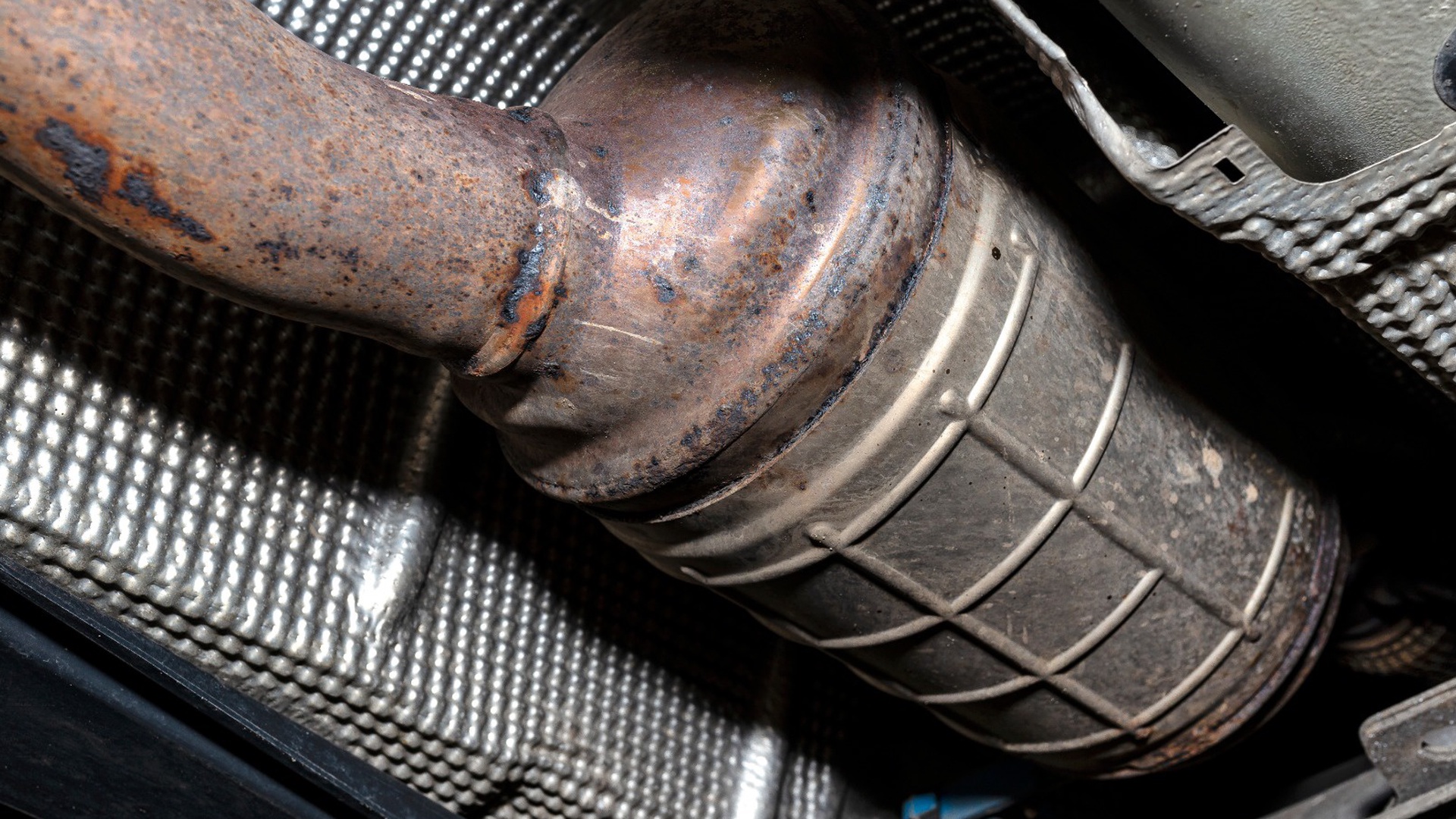
A yard can see a dead car in two ways: as a massive pile of scrap steel or as a bunch of parts with different values. The steel shell is the biggest component by volume, but one of the most valuable bits may be in the exhaust. A cat (catalytic converter) is only a few pounds, but a single high-value unit can be worth more than the scrap metal in the rest of the car. For the dismantlers, that's a massive difference in the economics of every car that comes through the gate. Taking the cats out and managing them properly is a lot of extra work before the crush. It can be the difference between a run-of-the-mill scrap return and a profitable recovery.
Catalytic converters reduce harmful exhaust emissions using platinum, palladium, and rhodium. These metals are in the form of a very thin coating on the converter's internal ceramic or metallic substrate. The quantities are small, but the metals are very valuable, and their prices are subject to the wider commodity markets.
That's why weight tells you absolutely nothing. A large steel vehicle body is essentially low-value ferrous scrap. A much smaller converter can have a very high value in terms of recoverable precious metal, which will be more than the value of the body itself. This also explains why two converters that look very similar externally can have entirely unique values. What matters is the metal content, not the shell's size. The values are not static. The price of precious metals will vary, and a converter's return will be determined by its original design and the amount of substrate it has. A hollow, badly damaged, or aftermarket unit shouldn't be valued the same as a solid factory unit.
There's no strict rule that every unit from a given make and model will have any value. The best indicators are the OEM part number, the vehicle's emissions design, and the condition of the internal material. That said, a few categories are worth looking at. Hybrid vehicles can be particularly excellent sources of valuable OEM converters. Because their petrol engines are constantly starting and stopping, the emissions system has to cope with a lot of temperature cycling. Some of the hybrids (there are several Toyota Prius applications, for example) have converters that are very rich in precious metals. The unit in question and its condition matter far more than the hybrid designation itself. Some of the larger, high-performance, and highly regulated vehicles may also have rich units. Engine size, emissions design, and the market where the manufacturer sold the vehicle will all affect how much precious metal the manufacturer used. A converter made to meet a very strict emissions specification can be very different from one made for a similar-looking vehicle in a different market.
OEM converters are generally the ones you want to look at more closely than the aftermarket. They're designed to meet the vehicle's original emissions and durability specifications. Many cheaper aftermarket units use less of the precious metal, so just because you find one under a valuable vehicle doesn't necessarily mean it'll bring the same return as the OEM. It's worth checking the stamped codes, installation details, and substrate condition to avoid that trap. The practical lesson for a yard is to identify and sort the converters as you take them out. Keep the readable codes with the units; where possible, note the source vehicle and split them into OEM, aftermarket, damaged, and metallic substrate. Good records make it much easier to assess and much harder to misgrade.
A street buyer will often offer you a straightforward deal: look at the converter, name your piece price, and pay on the spot. That piece price, of course, has to cover the buyer's costs, risk, and profit and, often enough, another buyer further down the chain. An obscured code or a damaged shell can also result in a very conservative grade even if there's a lot of valuable material inside.
For yards generating a fairly consistent volume of converters, a different approach is to sell a documented lot to a reputable refiner. Rather than relying on visual estimates, the refiner can process and sample the material and then settle based on the actual platinum, palladium, and rhodium content measured. The yard can then assess the offer against the stated deductions for processing, sampling, and refining, rather than working out the price of a stack of individual pieces. That doesn't mean every direct refining arrangement will be better value, though. Lot size, freight, processing costs, payment timing, and contract terms all come into it. You need to ask how the material will be weighed and sampled, which assay will determine payment, what the fees are, and how disputes will be resolved. A clear answer to all those questions is as important as a good headline rate.
A yard is already working hard to get value out of engines, transmissions, wheels, and scrap metal. The same applies to their converters. They need the same respect. Set them aside properly, keep all the relevant info, and then compare a lot-based refiner's offer with what a local buyer would pay. Before the next lot leaves the yard, get your catalytic converter lot quoted. A proper quote on that lot will tell you exactly what those little bits of exhaust are adding to the value of every vehicle you're dismantling. When it comes to turning your precious metals into cash, Phoenix Refining is ready to assist.