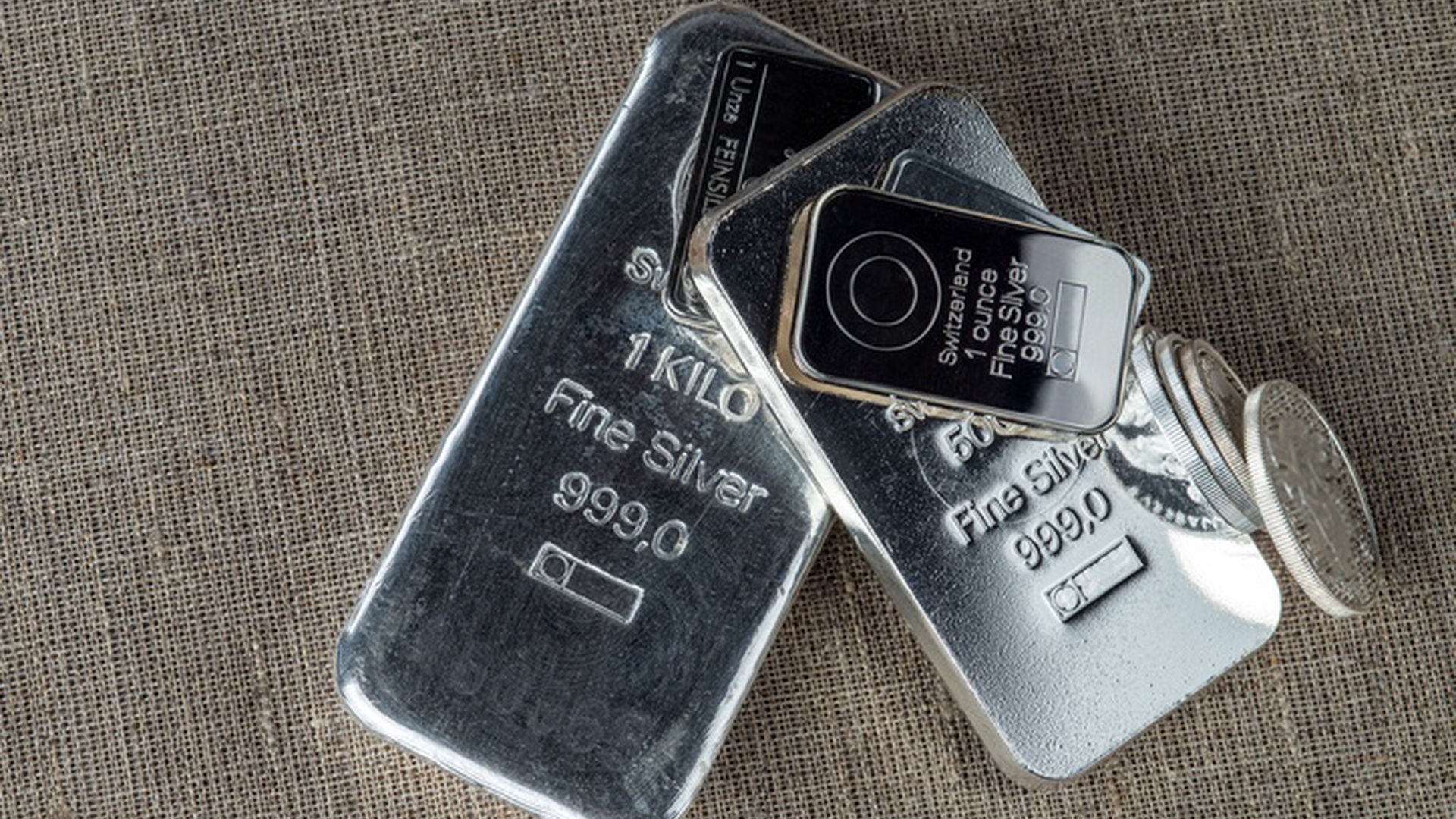
Silver’s dramatic price surge in recent months has not only captivated investors but has prompted leading analysts to upgrade their forecasts with unprecedented enthusiasm. On Tuesday, January 20, 2026, silver skyrocketed to a new all-time high of $95.34 per ounce, a 6.54% intraday jump that cements a gain of over 185% in the past year. The white metal’s trajectory now mirrors, and on a percentage basis even outpaces, that of gold, placing it at the center of a structural and geopolitical narrative redefining the global precious metals market.
Major investment banks, including Goldman Sachs, JPMorgan, and Bank of America, are reiterating bullish calls on gold, with year-end projections ranging from $5,000 to $5,300 per ounce. Yet the more dramatic headlines belong to silver, where forecasts are beginning to stretch beyond the once-unthinkable. Peter Schiff sees $100 as a minimum investment. Educator Robert Kiyosaki sees silver nearing $200, while macroeconomic strategist Tom Bradshaw has laid out a bold $375 silver price target by 2028, the most ambitious figure yet. But why is silver surging, and how far can it go?
Global catalysts are playing a critical role. President Donald Trump’s escalating tariff threats concerning Greenland, a bid demanding the semi-autonomous Danish territory be sold to the United States or face sweeping European tariffs, have triggered widespread market anxiety. On January 20, Trump announced 10% tariffs on eight EU nations, with tariffs rising to 25% by summer unless negotiations shift. That announcement sent shockwaves across markets and reinforced investor preference for safe-haven assets like gold and, more emphatically, silver.
Michael Brown of Pepperstone called Monday’s market reaction “predictable”: European equities fell, the U.S. dollar weakened, and haven assets soared. Silver rose even more sharply than gold, thanks largely to its combined monetary and industrial characteristics. “The market is reacting schematically to new geopolitical tensions,” said Marek Rogalski at BossaFX, underlining how the feud over Greenland has “transitioned into an economic war between the U.S. and the European Union.”
Where silver separates itself from gold is in its unique dual identity. While gold is largely a monetary metal used for central bank reserves and jewelry, silver is also a key industrial input, crucial to sectors such as solar energy, AI data centers, electric vehicles, and modern weaponry.
As Nikos Tzabouras of Tradu.com explains, “Silver is essential to the AI boom, the clean energy transition, and growing military budgets.” These secular trends underscore silver’s robust structural demand, making it more vulnerable to supply constraints than gold.
This has amplified silver’s price volatility. In 2025 alone, silver surged more than 140%, blowing past gold’s impressive gain of 64%. Entering 2026, silver had already risen by over 25% versus just 6% for gold in the year’s early trading, fueling speculation that it could outperform gold for a second consecutive year.
Further supporting silver’s continued outperformance are several significant supply-side catalysts. In November 2025, the U.S. Department of the Interior recognized silver as a “critical mineral,” highlighting its strategic importance in various industries. Additionally, in early 2026, China implemented stricter export controls on silver to secure resources essential to its technological and energy ambitions. This shift has led to a front-loading of silver shipments into the United States, resulting in a depletion of London’s silver reserves and tightening global availability. These factors collectively strengthen the outlook for silver as a valuable asset.
While silver steals headlines with larger percentage moves, gold remains as quintessential as ever as a safe-haven asset. Its current price near $4,737 is a historic high, and consensus estimates from Goldman Sachs, JPMorgan, and Bank of America project it will climb to $5,000 by year-end. Analyst Peter Schiff sees a remote chance of gold rising to $6,000 during periods of highly volatile geopolitical events. At the same time, Bradshaw’s more apocalyptic forecast targets $9,000 by 2028, a signal he believes could herald an impending economic crisis.
“Gold has changed 38% in value in 11 of the last 15 months, a move that historically signals recession,” Bradshaw warns, citing past episodes preceding the 1973–75 stagflation, 1980s double-dip recession, and 2008 financial meltdown.
Some banks foresee short-term corrections for gold as speculative positions become overextended. Yet, structurally, the metal remains on firm ground, with institutional and retail demand steadily rising.
Despite its volatility, silver remains cheaper than gold, making it more accessible to middle- and lower-income investors, particularly in emerging markets such as China and India. Shanghai silver trades at a $10 premium over London spot prices, a reflection of robust local demand and tight inventories.
The gold-to-silver ratio, historically a key indicator, fell to around 50 from earlier highs above 80, signaling a continued rotation into silver. The ratio could drop to 40 or lower, implying even more upside for silver relative to gold.
A major driver of both metals’ surges has been the changing tone from global central banks. With the Federal Reserve expected to lower interest rates multiple times in 2026, non-yielding assets like silver and gold have regained appeal amid a weakening dollar.
Large institutions are catching on. BingX and CME Group have reported record-breaking volumes in metals futures, while major brokerages are adjusting margin requirements in anticipation of continued volatility. Analysts warn that the risk/reward balance for silver has become less favorable after its parabolic rise. “Silver usually experiences much larger drawdowns than gold after sustained rallies,” Wewel stated, suggesting that while the metal could remain elevated in price due to structural deficits, continued outperformance might be harder to sustain.
Even so, no consensus is emerging that the metals bull run is over, only that investors should expect greater volatility and tread carefully.
As we move deeper into 2026, silver finds itself at the convergence of tectonic economic, geopolitical, and technological shifts. More than ever, it is no longer just gold’s “poor cousin.” Instead, it stands at the nexus of two worlds: as a monetary insurance policy in uncertain times and a critical industrial metal powering the technologies of tomorrow.
While pullbacks are likely, the bullish case for silver remains intact. Between rising demand, constrained supply, tariff tensions, Fed rate cuts, and surging interest from retail and institutional buyers alike, silver could reach levels even beyond those once-lofty forecasts of $100, $200, or even $375 per ounce.