Sterling silver has a reputation for lasting value. For generations, families have passed down candlesticks, candelabra, compotes, bowls, and other hollowware as heirlooms, often assuming that an item's weight reflects the amount of silver it contains. In the refining industry, however, one of the most common misunderstandings involves weighted sterling silver. These pieces may look substantial, feel heavy, and bear a legitimate sterling mark, but their recoverable silver content is often far lower than their gross weight would suggest.
Weighted sterling is not fake silver. It is genuine sterling silver, but it is not solid sterling. Instead, it is a composite object made of a thin sterling silver shell surrounding a heavy internal core. That core may contain cement, pitch, plaster, wax, resin, steel, brass, copper, or other non-precious materials. For sellers, estate buyers, jewelers, pawnshops, and scrap dealers, understanding this distinction is essential before estimating melt value.
Silver has been associated with wealth, status, and refinement for thousands of years. Ancient courts, aristocratic households, and wealthy families used silver not only for dining and decoration but also as a form of stored wealth. Before industrial manufacturing, silver objects were made through labor-intensive hand processes. Silversmiths melted silver into ingots, hammered it into shape, repeatedly annealed the metal to restore workability, and finished each piece by hand. Because both the metal and the labor were expensive, solid silver hollowware was reserved for those with considerable means.
Industrial advances changed the silver trade. Rolling mills enabled manufacturers to produce uniform sheets of sterling silver more efficiently, and companies such as Gorham, Wallace, Towle, and International Silver helped bring silver goods into middle-class homes. By the late nineteenth and early twentieth centuries, silverware was no longer exclusive to the aristocracy. It became a popular symbol of domestic success, especially in the United States.
The popularity of sterling hollowware surged again after World War II. During the 1950s and 1960s, formal dining was an important part of middle-class culture, and sterling candlesticks, footed bowls, compotes, and candelabra became standard wedding and anniversary gifts. The challenge for manufacturers was cost. A large candlestick or candelabrum made entirely of solid sterling would have required a significant amount of silver and would have been far too expensive for the average household. Weighted sterling solved that problem by offering the look of substantial silver while using only a thin outer layer of sterling over a much less expensive core.
Sterling silver is an alloy containing 92.5 percent pure silver and 7.5 percent other metal, usually copper. Pure silver is too soft for most functional objects, so copper is added to give the metal strength and durability. When an item is solid sterling, that alloy runs throughout the entire object. A solid sterling spoon, bowl, or tray is generally valued by its total sterling weight, less any non-silver attachments or weighted components.
Weighted sterling hollowware is different. In these objects, the visible exterior is sterling silver, but the interior is not sterling silver. Manufacturers formed a thin silver shell, often by spinning a sheet of sterling on a lathe over a shaped mold. The shell was then filled or reinforced with heavier materials to give the finished object stability, structure, and a substantial feel in the hand.
The filler served a practical purpose. A thin sterling shell by itself would dent, bend, or collapse easily, especially in tall items such as candlesticks. Internal pitch, cement, plaster, wax, or resin supported the silver skin from the inside. Steel rods or other base-metal reinforcements were often added through the center of candlesticks and candelabra to keep them upright and rigid. The result was a decorative object that looked like heavy sterling silver but contained only a limited amount of precious metal.
The most important refining fact about weighted sterling is that the scale weight is not the silver weight. A weighted candlestick may weigh several hundred grams, but most of that weight may come from cement, pitch, steel, or other non-precious material. The refinery can only pay on recoverable precious metal, not on filler.
In many common weighted sterling items, the actual sterling silver shell represents only about ten to twenty percent of the gross weight. The exact yield depends on the manufacturer, style, age, size, and construction of the piece. Some items may produce a little more, while others may produce less. A candlestick weighing 500 grams, for example, may contain only 50 to 100 grams of sterling silver shell. Since sterling itself is 92.5 percent silver, the pure silver content is lower than the shell weight.
This is why sellers are often surprised when a heavy pair of sterling-weighted candlesticks does not yield the payout they expected. From a refining standpoint, a large object with a cement-filled base is completely different from a solid sterling tray or a set of sterling flatware. The value is determined by what can actually be recovered, melted, assayed, and refined.
Weighted sterling is often confused with both solid sterling and silver plate, but each category has a different refining value. Solid sterling is a silver alloy throughout the object. With proper testing and removal of any non-silver parts, its value is closely tied to its total sterling weight. Weighted sterling has a genuine sterling exterior, but much of the item's weight is non-precious filler. Silver plate, by contrast, is usually a base metal object coated with a very thin layer of silver.
This distinction matters greatly. Silver-plated items may look similar to sterling, especially when polished, but the silver layer is typically measured in microns. Even heavy silver plate usually contains too little recoverable silver to justify refining unless processed in very large industrial quantities. Weighted sterling has more value than ordinary silver plate because its outer shell is sterling, but it should still not be valued like solid sterling.
Hallmarks help, but they must be interpreted correctly. Marks such as "Sterling Weighted," "Weighted Sterling," "Sterling Cement Filled," or "Reinforced" indicate that the item contains genuine sterling silver combined with non-precious materials. A simple "Sterling" mark may appear on some pieces, but the item's construction must still be examined. Candlesticks, candelabra, weighted compotes, and certain handled or footed hollowware pieces often contain filler even when the silver mark is legitimate.
A professional refinery evaluates weighted sterling through inspection, testing, separation, and assay. The process begins by identifying marks and examining the item's construction. Refiners look for signs of filling, including base plates, seams, plugs, cement-filled sections, threaded rods, soldered joints, and unusual weight distribution. A magnet may also be used to detect steel reinforcement, although magnetism does not automatically mean the item is plated; many genuine weighted sterling pieces contain steel rods.
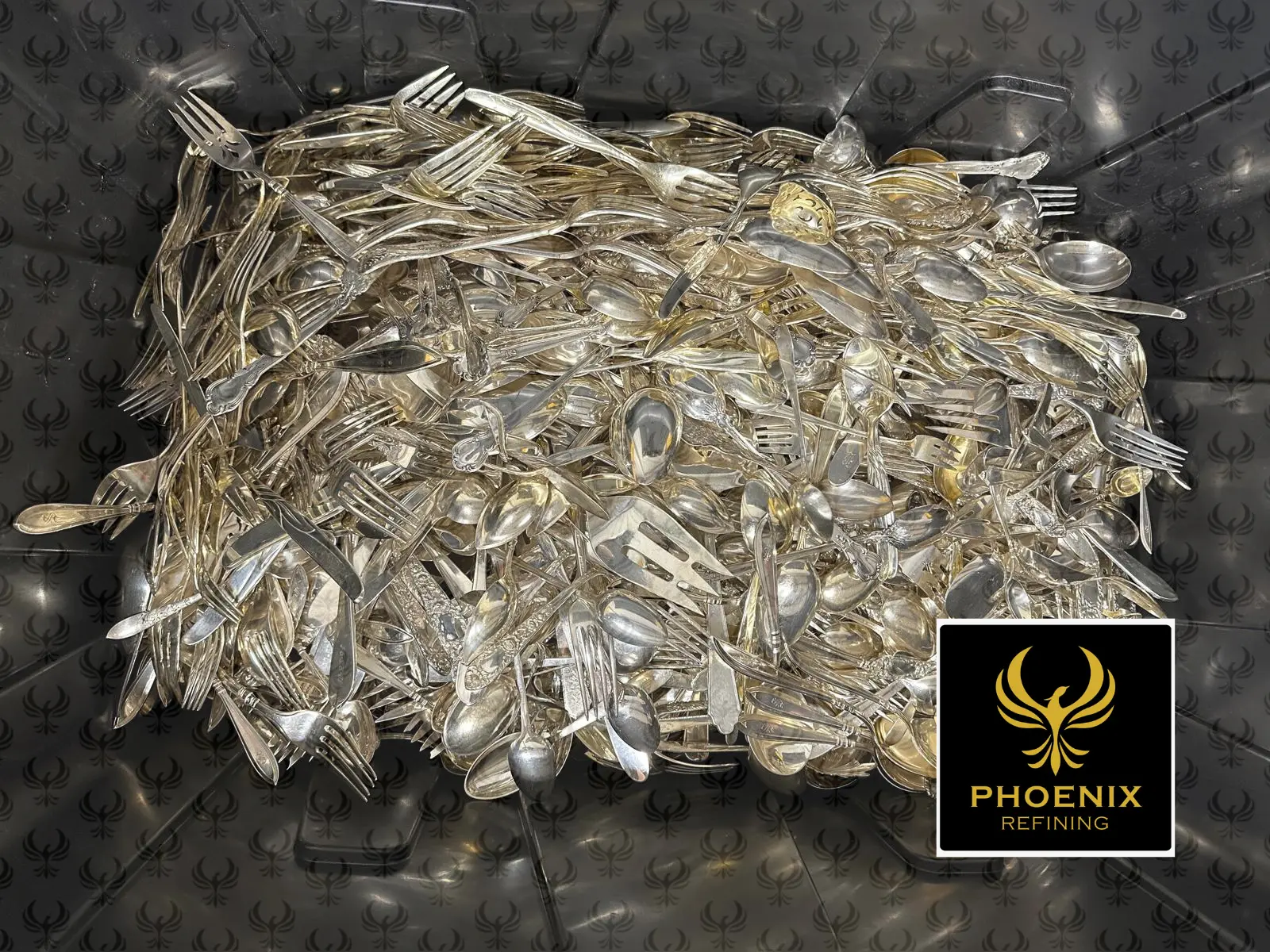
The next step is determining how much recoverable silver is present. In many cases, the item must be dismantled to separate the sterling shell from the filler. Cement, pitch, wax, plaster, resin, brass rings, steel rods, and other non-precious components must be removed before the silver-bearing material can be accurately processed. Once separated, the sterling portion can be melted and assayed to confirm its silver content. This extra labor is one reason weighted sterling is handled differently from clean sterling flatware or jewelry. A bag of sterling forks can often be weighed, tested, melted, and assayed with relatively straightforward processing. A group of weighted candlesticks may require substantial preparation before the refinery can determine the true payable metal content.
Weighted sterling silver is genuine silver, but it must be valued correctly. Its impressive weight often comes mostly from filler, not precious metal. While solid sterling items can usually be valued close to their full sterling weight, weighted hollowware must be evaluated according to the recoverable silver shell, which is commonly only ten to twenty percent of the gross weight.
For sellers, the key lesson is simple: heaviness does not equal melt value. A candlestick marked "Sterling Weighted" may be beautiful, historic, and worth preserving. Still, its refining value depends only on the silver that can be recovered after non-precious materials are removed.
A professional refining company can accurately and responsibly identify, separate, assay, and process weighted sterling. Whether you are settling an estate, managing pawnshop inventory, buying scrap, or recycling damaged hollowware, expert evaluation ensures that you understand the true value of your silver before it enters the refining process.