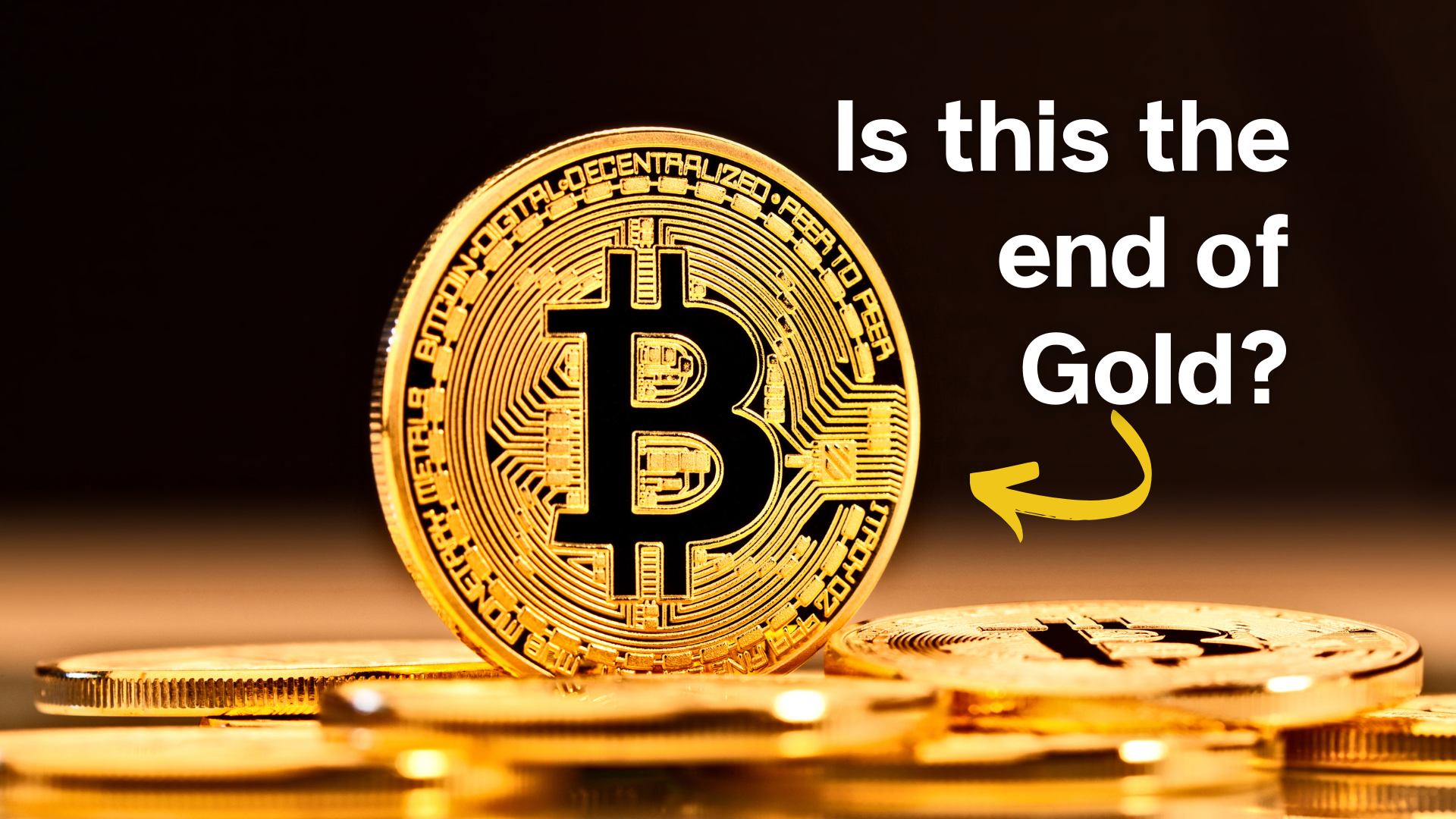
The question of whether Bitcoin will ever replace gold as a haven asset or store of value has become increasingly relevant as Bitcoin’s role in global financial markets continues to grow. Both Bitcoin and gold have long been seen as important assets for portfolio diversification, particularly during periods of financial instability. However, they serve distinct purposes and have different characteristics that may shape their future roles. Although Bitcoin has shown promise as an investment shelter, it is unlikely to replace gold in the foreseeable future completely. Understanding the factors that drive the appeal of both assets can help clarify why this may be the case.
Gold has traditionally been viewed as a store of value, a haven during periods of economic turmoil, and a hedge against inflation. Its long history as a currency, scarcity, and tangible nature have given it a level of trust that Bitcoin, despite its growing adoption, has yet to achieve fully. Investors rely on gold’s low volatility, liquidity, and institutional acceptance to weather financial storms. In contrast, Bitcoin, often dubbed digital gold, offers similar qualities but through a modern, digital medium. The two assets are seen as ways to preserve wealth in the face of inflation or political instability, but they cater to different investor needs.
While Bitcoin shares many attributes with gold, such as limited supply, fungibility, and use as a diversifier, its volatility is far greater than gold’s, making it a riskier option for those seeking stability. Bitcoin’s value can fluctuate wildly over short periods, making it less attractive as a long-term store of value compared to gold. However, Bitcoin’s digital nature offers unique benefits, such as ease of transfer, secure online storage, and lower transaction costs for global exchanges. This makes Bitcoin a more convenient and flexible asset for modern investors, particularly those in emerging markets or those seeking to capitalize on its potential for high returns.
Recent research has explored how Bitcoin functions as a diversifier, a hedge, and even a haven asset in times of crisis. These roles are particularly important when considering Bitcoin’s potential to replace gold. Bitcoin has proven to be a diversifying force in portfolios, especially for green assets (i.e., sustainable investments). Studies suggest that Bitcoin’s role as a shelter for these assets is stronger than gold’s, with Bitcoin showing a more negative correlation with green assets during periods of market uncertainty. This dynamic reveals Bitcoin’s ability to hedge against fluctuations in the value of sustainable investments, something gold, with its more stable characteristics, does not necessarily do as effectively.
Moreover, Bitcoin has proven its value as a haven during financial crises, particularly in highly volatile markets. The 2008 financial crisis and the subsequent COVID-19 pandemic have provided Bitcoin with opportunities to demonstrate its potential as a store of value amid losses in traditional assets. For instance, during the pandemic, Bitcoin’s price volatility increased, but its correlation with traditional assets like stocks often turned negative, indicating its potential as a risk mitigator. This trend was even more pronounced for green assets, where Bitcoin served as a useful portfolio hedge. These findings align with the view that Bitcoin’s role as an investment shelter is particularly valuable for emerging markets and digital economies, which are more attuned to the benefits of cryptocurrency.
However, Bitcoin’s volatility remains a significant barrier to its full replacement of gold as a safe-haven asset. While it is effective in some market conditions, its tendency to experience sharp price swings can be unsettling for traditional investors, particularly those who have long relied on gold’s stability. This volatility underscores the risk of relying solely on Bitcoin as a store of value during times of economic turmoil, making gold a safer bet for conservative investors.

Despite Bitcoin’s growing role as a digital hedge and haven, gold remains unmatched in its historical significance and institutional acceptance. Central banks have held gold reserves for centuries, and it continues to be viewed as a reliable safe-haven asset. In times of geopolitical unrest or financial crises, investors flock to gold due to its long-standing role as a global store of value. Its tangible nature provides a sense of security that Bitcoin, as a digital asset, cannot replicate. The physicality of gold, coupled with its liquidity in global markets, ensures that it remains a preferred choice for institutional investors, such as central banks and large financial institutions.
Gold is also seen as a stable hedge against inflation, currency devaluation, and market instability. Its price has historically remained relatively stable, allowing it to serve as a secure asset that can weather economic storms better than most other investments. For example, during times of hyperinflation or currency crises, gold has been used to preserve wealth and retain purchasing power. While Bitcoin has shown potential as an inflation hedge, it lacks the historical reliability and widespread acceptance of gold, making it less predictable as a long-term store of value.

Despite Bitcoin’s potential to serve as an effective diversifier and hedge, it is unlikely to entirely replace gold. Bitcoin’s digital flexibility and role as a risk mitigator in modern markets may allow it to coexist with gold as a complementary asset. Still, its volatility will prevent it from fully supplanting gold as the go-to asset for conservative investors seeking long-term stability. Gold’s institutional acceptance, historical significance, and tangible nature ensure its continued role in the global economy as a haven. Bitcoin, on the other hand, remains a more speculative asset that some investors may incorporate into their portfolios for higher returns or as a complementary risk-diversification tool.
In summary, while Bitcoin’s role as an investment shelter against traditional assets and green investments is expanding, it is unlikely to completely replace gold as a haven asset in the near future. Bitcoin’s digital nature and potential for high returns in certain market conditions make it an appealing alternative for certain investors, especially in emerging markets or those focused on green investments. However, gold’s stability, historical track record, and institutional acceptance continue to make it a preferred choice for investors seeking a haven during financial turmoil. Rather than replacing gold, Bitcoin is more likely to serve as a complementary asset, offering investors additional options for portfolio diversification and risk management in an increasingly digital and volatile financial landscape.