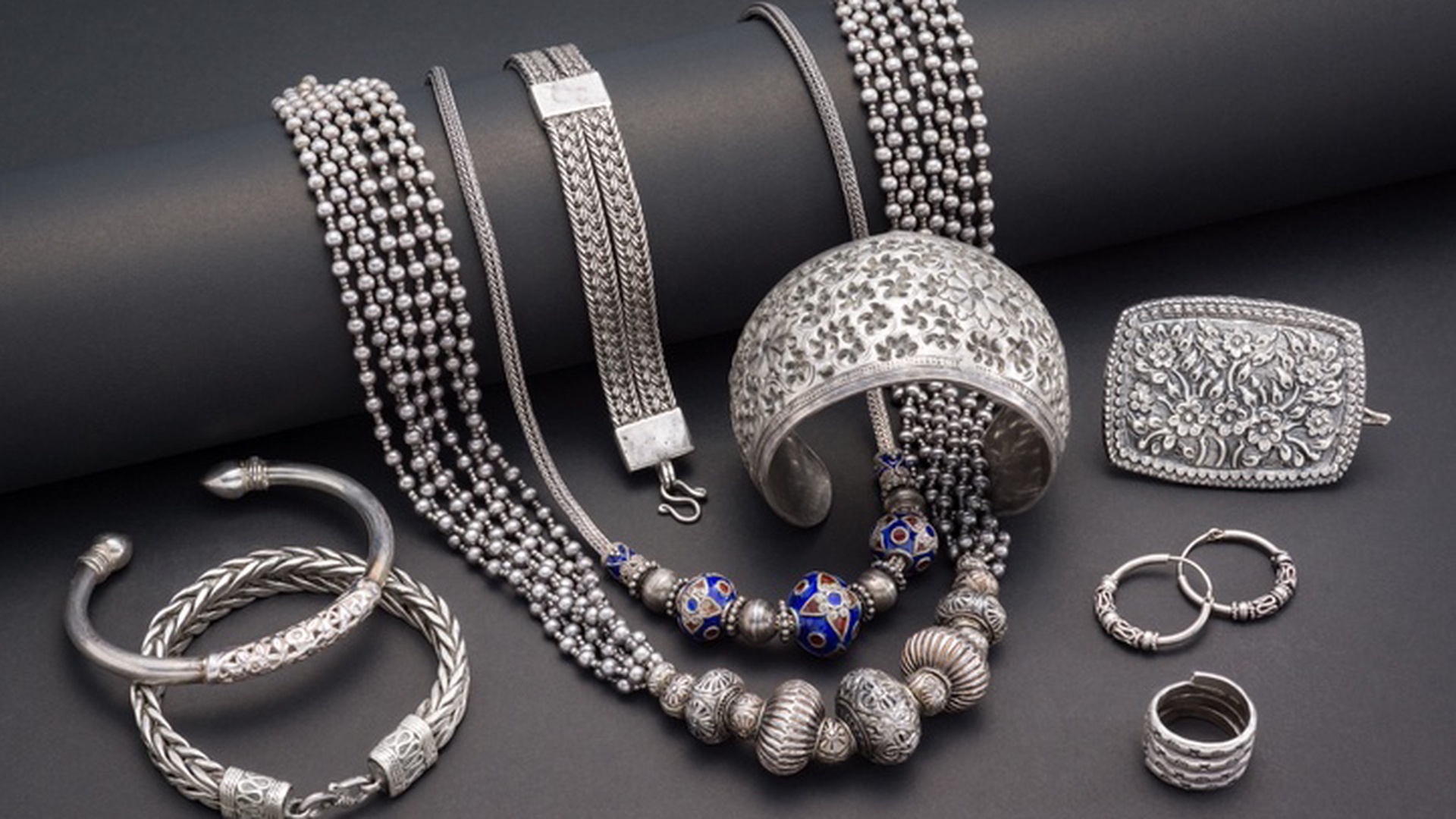
If you have found a bright white metal object marked "935," "940," or "960," especially with a small Winged Unicorn symbol, there is a good chance it is made of Argentium silver. Argentium is a modern silver alloy developed to improve on traditional sterling silver. It is real silver, but it is not ordinary sterling silver.
Traditional sterling contains 92.5 percent silver and 7.5 percent copper. The copper strengthens the silver, but it also causes problems. It contributes to tarnish, gives the metal a slightly warmer tone, and creates firestain when the metal is heated during soldering or casting. Argentium solves many of these issues by replacing part of the copper with germanium.
Germanium is the key to Argentium's unusual performance. When exposed to air, it forms a thin, transparent layer of germanium oxide on the metal surface. This protective layer helps block sulfur and oxygen, which are responsible for much of the dark tarnish and oxidation on silver. As a result, Argentium stays bright far longer than standard sterling and often has a cleaner, whiter appearance.
In the early 1990s, Peter Johns, a metallurgist and silversmith at Middlesex University in London, developed Argentium. His goal was to create a silver alloy that resisted firestain, a deep copper-oxide discoloration that forms in ordinary sterling when it is heated. The addition of germanium made that possible. The alloy was later commercialized under the Argentium name and became known in jewelry, silversmithing, and some specialty manufacturing fields.
The numbers stamped on Argentium pieces indicate silver purity. A piece marked "935" contains about 93.5 percent silver. "940" means about 94 percent silver, and "960" means about 96 percent silver. These grades all contain more silver than standard sterling. The remaining metal is mostly copper, with a small amount of germanium. Licensed Argentium pieces may also carry the Winged Unicorn mark, though marks alone should not be treated as final proof.
The most reliable way to confirm Argentium is through X-ray fluorescence testing, usually called XRF. This non-destructive test identifies the elements in the object without cutting, filing, or using acid testing. A genuine Argentium reading should show high silver content, copper, and a small but clear amount of germanium. That germanium signature is what sets Argentium apart from ordinary sterling silver.
Argentium is valued mainly for its silver content, but its practical advantages can also add to its appeal. In the scrap or pawn market, buyers usually calculate value according to weight, purity, and the current silver spot price. Since Argentium often contains more silver than sterling, it may have a slightly higher melt value. However, the biggest premiums usually come from craftsmanship, designer reputation, condition, or collectible interest, not simply from the germanium content.
For jewelers, Argentium is prized because it is easier to keep clean and can be worked in ways standard sterling cannot. It resists firestain, requires less aggressive polishing, and can often be fused without solder. Fusing allows metal pieces to join directly, creating clean seams and fine decorative effects such as granulation. This makes Argentium especially useful for detailed jewelry and high-quality silverwork.
However, Argentium must be handled correctly during repair or fabrication. It conducts heat differently than traditional sterling, so heat stays more localized. This can help with precision work, but it also makes overheating easier. At high temperatures, Argentium can become brittle, a condition known as hot shortness. If it is stressed, clamped too tightly, moved, or quenched while still hot, it may crack. Anyone repairing an Argentium object should understand these differences before using a torch.
Another advantage is that Argentium can be heat-hardened. After forming, it can be treated at controlled temperatures to become stronger and more durable. This is useful for rings, clasps, hinges, fine wirework, and other objects that need both beauty and structural strength.
Argentium also appears in specialized uses beyond jewelry. Some high-end flute makers have used it for its tarnish resistance, strength, and bright tonal character. Its resistance to moisture-related discoloration is especially useful in instruments exposed to breath and handling.
Caring for Argentium is simple but should be gentle. Wash it with mild soap and warm water, dry it with a soft cloth, and avoid harsh silver dips or abrasive polishes. Strong chemical cleaners can strip away the protective germanium oxide layer, temporarily reducing the alloy's tarnish resistance. With normal care, Argentium will maintain its bright white surface much longer than ordinary sterling.
So if your newly found object is unusually bright, marked with a higher silver number, and possibly stamped with a Winged Unicorn, it may be Argentium. It is a modern silver alloy designed to preserve the beauty of silver while reducing tarnish, firestain, and maintenance needs. To know for certain, have it tested with an XRF. If germanium appears in the analysis, you have found Argentium, silver engineered for the modern age.
If your object is unusually bright and marked "935," "940," or "960" and possibly stamped with a winged unicorn, it may be Argentium. The only way to know for sure is professional testing. Have silver, jewelry, or unidentified precious metal you want evaluated? Contact Phoenix Refining for professional testing, refining, and valuation services. Their team can help determine whether your item is Argentium, sterling, or another precious metal and explain its true value.