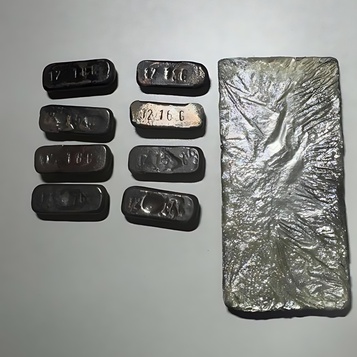
Argentium silver represents a significant evolution in sterling silver alloys, offering solutions to long-standing industry challenges, particularly the issue of tarnishing. Traditional sterling silver, composed...
A groundbreaking team has developed a new, milder approach using a mixture of iron chloride (FeCl₃) and potassium chloride (KCl) to chlorinate and dissolve iridium....
Molecular Recognition Technology (MRT) is an innovative process designed for the selective separation and recovery of metals, particularly Platinum Group Metals (PGM) and Rare Earth...
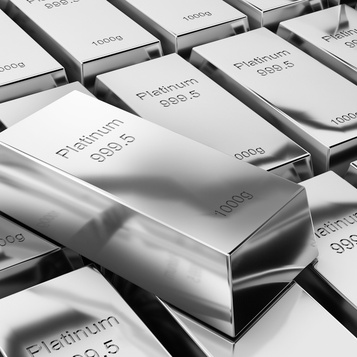
Platinum is a rare and highly valuable precious metal that plays a critical role in various industries, most notably in automotive catalytic converters, jewelry, and...
Rhodium, a platinum-group metal (PGM), is an essential and highly valuable component in a variety of industrial applications, especially in catalytic converters used in the...
Urban mining refers to the process of recovering valuable metals from end-of-life (EoL) products, such as electronics, automobiles, and batteries, which serve as "above-ground" mines....
Silver has played a pivotal role in human civilization for over 6,000 years. Its historical significance is matched by its growing importance in today's world,...
Palladium (Pd) is a rare, precious metal with a silvery-white appearance, belonging to the platinum group metals (PGMs), which also includes platinum, rhodium, ruthenium, osmium,...
Platinum, along with other platinum group metals (PGMs) such as palladium (Pd) and rhodium (Rh), is widely used in automotive catalytic converters (TWC), which reduce...
The platinum group metals (PGM) market is undergoing a profound transformation as shifting supply constraints, evolving vehicle technology, and geopolitical influences reshape demand patterns. While...
Precious metals such as platinum and palladium have often been classified as alternative safe-haven investments, yet their performance under different market conditions reveals complexities that...
The platinum group metals (PGMs) include six d-block elements: ruthenium (Ru), rhodium (Rh), palladium (Pd), osmium (Os), iridium (Ir), and platinum (Pt). These elements are...
A Gold IRA, often referred to as a precious metals IRA, represents a specialized form of self-directed individual retirement account. Unlike traditional IRAs that typically...
Purifying Gold with Fire Gold refining has a rich history that spans centuries, with fire being one of the oldest and most trusted methods to...
Gold has been a sought-after asset for centuries, offering a reliable store of value that many investors count on to diversify their portfolios and safeguard...
In 1940, as Nazi Germany launched its invasion of Europe, Norway faced the imminent threat of occupation. In a desperate and daring mission, Norwegian officials...
Precious metals have a longstanding reputation as a reliable investment and a way to secure value in uncertain times. This article covers how to find...
Throughout history, precious metals like gold, silver, platinum, and palladium have stood as enduring symbols of wealth and security. In times of economic uncertainty, political...
The 2010 incident off the Senkaku Islands, where a collision involving a Chinese fishing boat and Japanese coast guard vessels led to an abrupt...
Palladium is set to transition into surplus from 2025, with the market forecasted to reach an oversupply of 897 koz by 2027. The primary driver...
Aluminum has become an indispensable material in modern industries and everyday life. Yet, it wasn’t always so widely available or affordable. In fact, at one...
Rare earth elements (REEs) are critical for modern technology, powering everything from electronics and renewable energy systems to defense applications. Traditional mining of REEs is...
The adoption of gold as the standard for monetary systems marks one of the most significant chapters in economic history. Gold's transformation from a rare...
The global waste crisis is a major environmental concern, and one of the fastest-growing segments of this issue is e-waste. Electronic waste, or e-waste, refers...
The recovery of gallium and indium from electronic waste (e-waste) is a growing concern due to the increasing global demand for these metals, their critical...